

Delhi-NCR
In recent years, a notable trend has emerged across gated communities in India, the implementation of standardised rate cards for domestic workers. These cards establish fixed prices for specific household tasks such as cleaning and cooking, aiming to create consistency in payments and prevent what some residents refer to as “bidding wars” between households competing for reliable help. This practice has gained traction, particularly in upscale residential areas across major Indian cities.
“Before implementing the rate card system, we often found domestic workers negotiating higher wages by citing better offers from other households,” explains Anita, an RWA president from a society in Gurugram. For many residents, especially senior citizens on fixed incomes, these standardized rates offer financial predictability. “On a limited pension, keeping up with rising wage demands has become difficult. The rate card gives us some stability,” shares Ramesh, a retired government employee living in a high-rise in Bengaluru.
However, the system has not been without controversy. “While maids and cooks are demanding higher pay, a proposed 20% wage increase faced strong opposition from residents. Many worry that revising the rates will lead to further demands,” admits a member of an operations committee from a large complex.
For domestic workers, the impact of rate cards extends beyond their monthly earnings. “I work in two homes, earning ₹4,000 from each. To make ends meet, I also drive a taxi at night,” says Latha, a 32-year-old single mother. Meena, a cook and cleaner with ten years of experience, echoes similar frustrations: “When I ask for a raise because everything is getting more expensive, residents point to the rate card and say their hands are tied.” Workers’ primary concerns include limited negotiating power, lack of input in setting rates, and the risk of replacement if they demand wages above the established figures.
Some communities are adopting middle-ground approaches. A growing number of residential complexes are shifting toward hourly wages instead of fixed monthly salaries. “Residents relocating from Western countries have introduced this concept, and many domestic workers prefer it since it provides clearer compensation for their time,” notes a resident from a prestigious society in Koramangala. Other communities are revising their rate cards to account for inflation and incorporate benefits like paid leave and festival bonuses. “We consulted with domestic workers’ representatives before updating our rate card,” shares an RWA secretary from Chennai. “Now, we review it annually and ensure the wages are fair and not exploitative.”
The debate surrounding domestic worker rate cards highlights broader issues of labor rights and economic fairness. While India lacks a central law governing domestic workers’ wages, some states including Maharashtra, Karnataka, and Kerala have established minimum wage regulations for domestic work. The International Labour Organization recognizes domestic work as formal employment, advocating for proper contracts, fair wages, and social security benefits.
As urban India navigates these evolving socioeconomic dynamics, striking a balance between residents’ desire for consistency and domestic workers’ right to fair compensation remains an ongoing conversation.
Here are 8 things to keep in mind when new to RWA responsibilities.
1. Gather opinions, but let the RWA decide
The Residents’ Forum is a great space to gather feedback, but decision-making should rest with the RWA. Residents who haven’t served in the RWA may lack the complete picture, and letting them decide directly can create polarization. An RWA that listens to all but makes balanced decisions internally earns trust and respect from the community.
2. The RWA office is not a corporate office
In an RWA, there is no corporate-style hierarchy or reporting line. Decisions are made collectively, through consensus. You won’t win every debate, but being a team player ensures smoother operations and better outcomes.
3. Know the legal risks
Visible risks like fire or crime, are just the tip of the iceberg. Hidden risks often arise from within the community itself. Be prepared for surprises—ensure the RWA has legal counsel ready to handle any challenges that come its way.
4. Experts make a difference—outsource wisely
Relying on members for critical tasks like accounting or keeping manpower on your payroll are common mistakes. Outsource to experts who can bring professionalism and accountability to the table. Let them handle the heavy lifting while the RWA focuses on the bigger picture.
5. Quality is an investment, not an expense
Choosing the cheapest manager, security agency, software, or hardware might save money in the short term but often leads to bigger issues down the line. Investing in quality services and solutions protects property value and ensures long-term sustainability for the community.
6. Build a culture of simple, enforceable rules
Instead of overcomplicating things, draft a few practical rules that suit a residential community. Enforce them consistently to foster a culture of responsibility. Simple rules, well-implemented, create harmony in the long run.
7. Avoid risky financial shortcuts
RWAs should avoid strategies that cut corners on compliance, especially with taxes. While these approaches may seem efficient at first, they can lead to trouble. Future RWA members might have to bear the brunt of legal issues, long after the original strategists are gone.
8. Respect the time of RWA members
No RWA member can handle everything alone. Create a collaborative environment where multiple members can share the workload. Set up systems and processes that make it easier for the next RWA to take over. A proper handover ceremony can acknowledge efforts and build goodwill.
Highlights
- 72% of gated communities reported frequently encountering issues during the move-in/move-out process, indicating it is a recurring problem for many communities.
- The most common issues cited were incomplete documentation (68%), unapproved moving timings (64%), and unpaid dues (60%).
- 60% of RWAs prefer addressing these issues through direct communication with residents, while smaller portions use fines (16%) or verbal warnings (16%).
- In terms of scheduling, 48% prefer flexible scheduling with prior notice, but 36% enforce pre-approved time slots to manage moves effectively.
- A minority of 12% have no specific policy in place, while another 12% allow residents to move anytime without restrictions.
- The data reflects a need for more structured policies to manage the move-in/move-out process, with communication and documentation being areas of improvement.
Managing the move-in and move-out process is one of the most challenging, yet crucial, aspects of housing society management. Often overlooked until a problem arises, this plays a vital role in maintaining order and harmony in any residential community.
Recently, a Mygate survey took a closer look at the challenges faced during move-ins and move-outs, revealing just how common these issues are. The findings show that 72% of respondents reported encountering frequent problems, proving this isn’t just an occasional hiccup but a widespread concern. Challenges such as incomplete documentation, unapproved moving timings, and unpaid dues surfaced as the most frequent causes of concern for both residents and RWAs. Sunita Gupta, an RWA treasurer from Delhi, described how these situations affect the community: “Movers often show up at odd hours, or residents leave without clearing their dues, causing tension among other residents.”
One of the most significant issues, according to 68% of respondents, is incomplete documentation. The lack of proper paperwork can lead to delays and frustration. Ajay Mehra, a resident from Bangalore, recalled his experience: “When I moved in, the delay in getting security clearance was frustrating because the paperwork wasn’t properly communicated to the gate staff.” This common oversight often results in unnecessary delays, leading to dissatisfaction for both new residents and the admin staff handling the process.
The survey also highlighted the challenge of unapproved moving timings, with 64% of respondents citing this as a major problem. It’s not just about a minor inconvenience; unplanned move-outs can disrupt the peace of the entire community. Residents from Mumbai and Hyderabad RWAs shared similar experiences: “We once had a resident move out at 5 a.m., causing a lot of noise and waking up neighbours,” said one admin. Unapproved moving times not only disturb the tranquillity of a housing society but can also lead to complaints and friction among neighbours.
Financial concerns also rank high on the list of issues, with 60% of respondents mentioning unpaid dues as a recurring problem. Residents moving out without settling their financial obligations can leave societies in difficult situations. Shalini Desai, an admin from Pune, voiced her concerns: “Making sure residents pay their dues before moving out is always a challenge. If not handled properly, it can lead to financial complications for the society.” This is why clear and enforceable procedures need to be in place for managing such situations.
While many societies handle move-ins and move-outs on a flexible basis, 36% of respondents expressed a preference for pre-approved time slots. A structured approach minimizes disturbances and ensures smooth coordination during busy moving periods. “Since introducing pre-approved time slots and better documentation checks, we’ve seen a noticeable drop in resident dissatisfaction during peak move-in seasons,” shared the RWA head of a society in Bengaluru.
Managing move-ins and move-outs is often a delicate balancing act for gated communities. Incomplete paperwork, unapproved timings, and unpaid dues remain recurring issues, as highlighted in the survey, fueling ongoing debates about the best way to handle these challenges effectively.
Highlights
- A significant 83% of gated communities expressed a supportive stance on the installation of EV charging stations within their communities.
- Safety concerns emerged as the most cited reason for resistance, closely followed by the additional financial burden that such installations might impose.
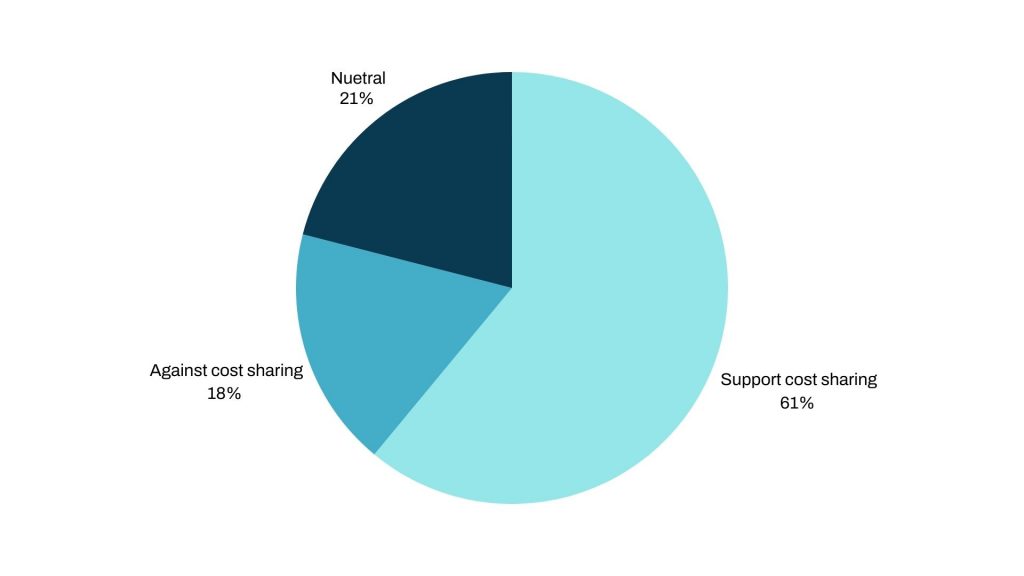
- 61% felt that all residents should share the cost of EV charging infrastructure, while 18% believed it should depend on the number of EV users.
- A majority of 81% of communites were against charging EV owners a higher maintenance fee, favoring equitable treatment across the community.
- The responses indicate a general openness to EV infrastructure but also highlight concerns that need to be addressed to ensure broad acceptance.
The need for easily accessible charging infrastructure has increased due to the rise in popularity of electric cars (EVs). Gated communities, with their controlled environments and dedicated parking spaces, offer an ideal setting for installing EV charging stations. However, implementing this kind of infrastructure may be difficult.
A recent survey by Mygate highlights the varying attitudes of communities towards this transition.Notably, 83% of resident welfare associations (RWAs) either supported or were neutral about installing EV charging stations within their communities while others voiced resistance due to concerns about infrastructure changes, safety, and space allocation. However Shweta, from Noida shared her enthusiasm, stating, “I’m very much interested in going green. EV charging installation is a step forward for our community, and it’s something I’ve been looking forward to.”
Resistance often comes from worries about how EV charging stations might shake up the existing setup and the safety risks they could bring. Plus, there’s the classic debate on whether we should all chip in for the costs or if EV owners should foot the bill—matter that requires careful consideration by everyone involved.
There’s also a split in opinion regarding cost distribution. Results say 61% of communities felt that all residents should share the cost of EV charging infrastructure, while 18% believed it should depend on the number of EV users. Anita from Mumbai expressed, “I think it’s only fair that everyone contributes since the infrastructure benefits the entire community, not just the EV owners.” However, her neighbor Sunil countered saying “It makes sense for EV users to bear the cost since they’re the ones directly benefiting from the charging stations.”
Mygate Locks allow you to monitor and control your door’s status from anywhere using your smartphone. Whether you’re at work, traveling, or just out for the evening, you can lock or unlock your door remotely, ensuring your home is always secure, even when you’re not there. With the Mygate Lock Pro you can go a step further and check the real-time door status, whether the door has been left closed or ajar.
Moreover, while integrating EV charging infrastructure in gated communities presents challenges, it also brings significant benefits. Embracing this change proactively can position communities as leaders in sustainability and enhance their appeal to future residents.
Highlights
- 51% of respondents acknowledge conflicts within their societies, with 14.4% reporting frequent conflicts and 34.6% experiencing them occasionally.
- Non-compliance with community guidelines (32.3%) and defaulted payments (24.7%) are the primary causes of conflicts.
- Among communities without owner-tenant conflicts, 76.9% of respondents attribute the absence of disputes to effective management and community engagement.
- Fines or penalties (39.7%) and verbal or written warnings (29.1%) are the most common measures used to combat issues.
- 13.4% of respondents have remarked that no formal measures have been implemented for conflict resolution.
- Over half (59.4%) of RWAs have separate guidelines for tenants, with 22.8% admitting that these guidelines aren’t strictly enforced.
- 52.9% of respondents state that tenants do not enjoy equal voting rights compared to homeowners, while only 38.2% affirm that tenants have equal voting rights.
Managing a residential community presents unique challenges, particularly in maintaining harmonious relationships between owners and tenants. A recent nationwide survey conducted among RWA members provides revealing insights into owner-tenant dynamics, conflict resolution, and community governance, uncovering the often-overlooked tensions that simmer beneath the surface.
“Conflicts with tenants are a real headache. They disrupt the peace and harmony we’ve worked so hard to maintain,” says Priya Sharma, an RWA member from Bengaluru. Her sentiment echoes across numerous communities, with the survey revealing that 51% of respondents acknowledge conflicts within their societies. While 14.4% report frequent conflicts, 34.6% experience them occasionally. The primary culprits? Non-compliance with community guidelines (32.3%) and defaulted payments (24.7%), followed by inter-resident disputes and the misuse of amenities.
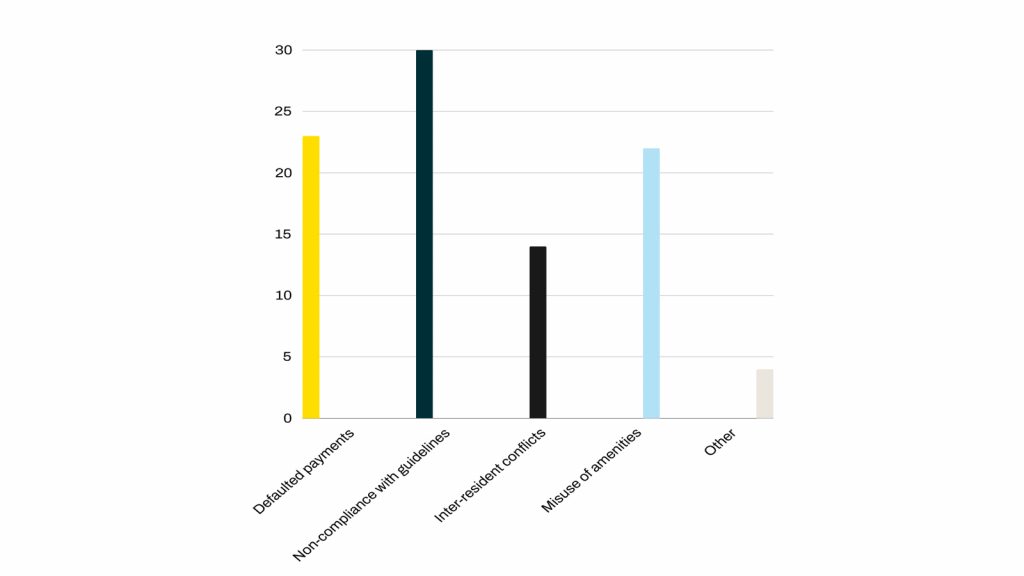
“Sometimes it feels like we’re playing referee in a never-ending match,” laments Rajesh Nair, an RWA president from Mumbai. Yet, intriguingly, among communities without owner-tenant conflicts, 76.9% of respondents said the absence of disputes wasn’t due to a lack of tenants. This suggests that factors such as effective management and community engagement are pivotal in maintaining peace.
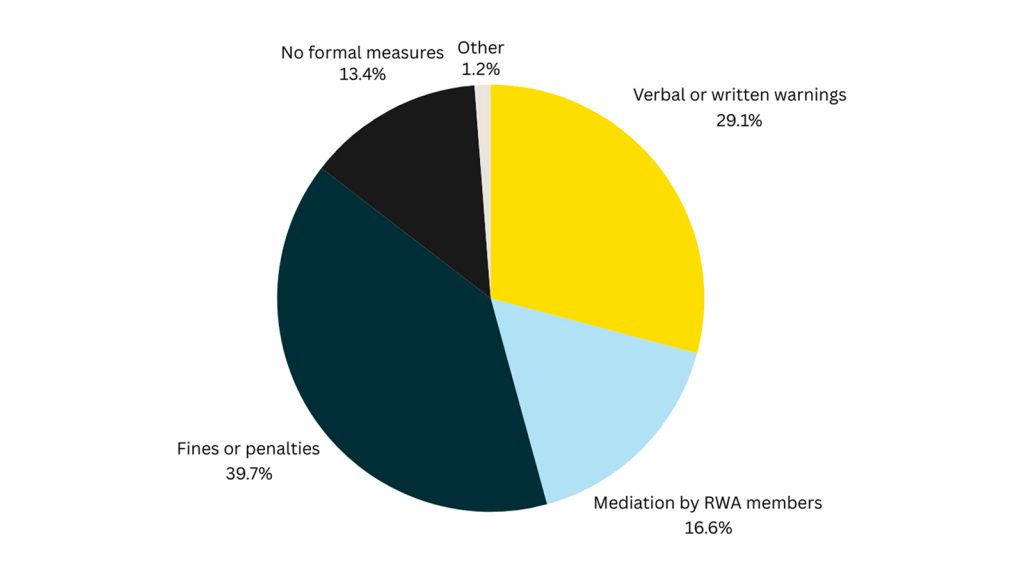
However many RWAs have turned to strict measures in place to combat the issues, fines or penalties (39.7%) and verbal or written warnings (29.1%) being the most common. Structured strategies such as these provide a path to manage disputes effectively. Among respondents, 13.4% have remarked that no formal measures have been implemented. “We often rely on ad-hoc solutions, which are neither fair nor effective,” admits Meera Joshi from Pune.
Regarding tenant guidelines, over half (59.4%) have separate guidelines in place, with 22.8% admitting that these aren’t strictly enforced. “Without stringent rules in place, misunderstandings are inevitable,” says Anil Verma, a resident from Chennai. Establishing clear guidelines could help reduce conflicts and foster community cohesion.
The survey also uncovers disparities in voting rights, with 52.9% of respondents stating tenants do not enjoy equal voting rights compared to homeowners. Only 38.2% affirm that tenants have equal voting rights, while 8.8% note variations depending on the poll.
The findings highlight the effectiveness of clearer guidelines, efficient conflict resolution, and equitable governance to foster harmonious and inclusive living environments. By addressing these areas, RWAs can enhance the overall living experience within their communities, ensuring peace and stability for both owners and tenants.
The treasurer of a Resident Welfare Association (RWA) holds a pivotal position, entrusted with the management of the community’s collective funds. This role demands meticulous attention to detail and a deep understanding of financial regulations. Unlike other RWA board members, the treasurer is responsible for handling substantial sums of money. This involves a wide range of tasks, from timely invoice generation and debt collection to budgeting and bank account management.
To make things simpler to manage, following a few ground rules usually helps.
In this blog, we are going to talk about those basic ground rules, and that is about the number of RWA bank accounts you should have for managing your Community funds.
Managing RWA Finances: Streamlining Bank Accounts
When taking charge of supervising the finances of a Resident Welfare Association (RWA) as a Treasurer, Board Member, or Community Manager, the first question you should ask is:
How many bank accounts does the Association hold?
Ideally, the answer should be no more than 1-3 per Association.
If your Association feels that multiple bank accounts are necessary, there should be a compelling reason for it. Managing numerous RWA bank accounts can be challenging and inefficient. Here are key considerations for maintaining multiple bank accounts:
- Structuring of Operating Fund and Reserve Fund
- Possible Diversification against Bank Defaults
Typically, you can manage with just two RWA bank accounts:
- Operating Account: This account handles the day-to-day operations and expenses of the homeowners association or RWA.
- Reserve Fund Account: This account is for the community’s savings, used for large future projects or unexpected major expenses (e.g., building painting, new play area construction, significant repairs due to natural calamities).
Some RWAs end up opening multiple bank accounts to manage various segments, such as different types of reserve fund requirements or different operating expenses. Additionally, some may open multiple accounts to take advantage of various benefits or offers from banks. However, creating too many segments can lead to complications in managing the accounts. It’s best to keep things simple and streamlined with just two accounts unless there are strong reasons for more.
Challenges of Multiple RWA Bank Accounts
Maintaining multiple bank accounts for an RWA can introduce several complexities:
- Increased Administrative Burden: Each account requires regular reconciliation with financial records, a time-consuming process even for inactive accounts.
- Operational Challenges: Whenever the RWA board changes, updating signatory details across multiple accounts can be cumbersome and error-prone. Overlooking a single account can freeze its funds.
- Potential for Misuse: Less frequently used accounts may receive less scrutiny, increasing the risk of financial irregularities.
So, the first day in office for a Treasurer should be to take stock of the Bank Accounts! Sunset redundant Bank Accounts, and ensure any new Bank Account opening follows a Due Diligence process – Passing a Board Resolution is just one of them.