

Drainage problems often start with small puddles but can quickly escalate into basement floods, foundation damage, mold, and costly repairs. Common causes include poor grading, clogged gutters, failed French drains, and heavy clay soil. Fixing grading, upgrading gutter systems, installing proper French drains or sump pumps, and improving soil are proven solutions. Regular maintenance and professional help (when needed) are essential to prevent disasters and protect your home’s value.
Drainage issues start small. Maybe you notice a puddle that doesn’t dry up after rain. Then your basement smells musty. Before you know it, you’re dealing with foundation cracks and mold problems that cost serious money to fix.
Introduction
Last month, my neighbor’s basement flooded again. Third time this year. She keeps mopping up water and hoping it’ll stop, but the real problem is outside – water has nowhere to go. We’ve seen this story play out dozens of times in our neighborhood.
Drainage issues start small. Maybe you notice a puddle that doesn’t dry up after rain. Then your basement smells musty. Before you know it, you’re dealing with foundation cracks and mold problems that cost serious money to fix.
Why proper drainage matters in residential areas
Your home’s drainage system isn’t just about avoiding puddles. Good drainage keeps your property value up. Houses with water problems sell for less – buyers can smell trouble from a mile away. Plus, standing water breeds mosquitoes and creates perfect conditions for mold growth. Nobody wants their kids playing in a yard that turns into a swamp after every storm.
Then there’s the legal side. More cities are cracking down on stormwater runoff. Your drainage problems can become your neighbor’s drainage problems, and that leads to disputes nobody wants.
Top residential drainage system problems
1. Poor grading around the house
Walk around after a good rain and you’ll spot the trouble areas. Water sitting against your house foundation? That’s bad news waiting to happen. This happens usually because whoever did the original grading didn’t think it through, or the ground has settled over time.
2. Clogged or broken gutters and downspouts
Overflowing gutters are like having no gutters at all. Water cascades down your walls, stains the paint, and dumps right where you don’t want it. Most of the time it’s leaves and debris, but sometimes the gutters are just too small for heavy storms.
3. French drain failure
These underground drainage systems work great when they’re new. Five years later? Roots grow into the pipes, debris clogs everything up, and suddenly your “fixed” drainage problem is back worse than before.
4. Basement water seepage
That musty smell isn’t just unpleasant – it’s expensive. Water finds its way through foundation walls when the soil outside gets saturated. You’ll see white chalky deposits on your basement walls, rust on metal fixtures, and eventually actual puddles on your floor.
5. Soil saturation and yard flooding
Some properties just don’t drain naturally. Heavy clay soil holds onto water like a sponge. Low spots collect runoff from higher areas. Your grass dies, your landscaping suffers, and your yard becomes unusable for days after storms.
Warning signs of drainage issues
- Water stains on foundation walls tell a story. Even if they fade during dry weather, they’re warning signs of bigger problems coming. I always tell people to take pictures of these stains so they can track whether things are getting worse.
- Cracks in walls or floors that keep getting bigger usually mean your foundation is moving. Water damage causes this kind of structural shifting, and it doesn’t fix itself.
- Mold and mildew smells in basements are dead giveaways. Once you’ve got moisture problems, mold follows quickly. This stuff affects your family’s health and makes your house basically unsellable.
- Mosquitoes breeding around your property means you’ve got standing water somewhere. Even tiny amounts in hidden spots can support huge mosquito populations.
- Dead patches in your lawn despite regular watering and fertilizing usually indicate drainage problems underground. Waterlogged roots can’t get oxygen and die off.
Best solutions for common drainage problems
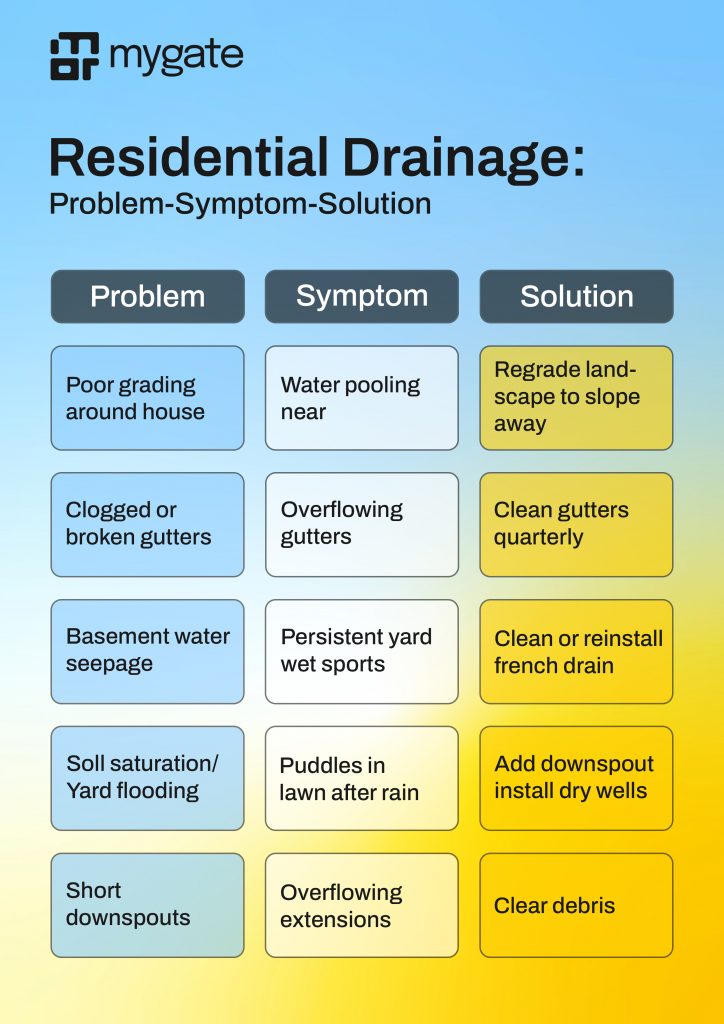
1. Fix your grading first
Your ground needs to slope away from your house – at least 6 inches over the first 10 feet. Sounds simple, but it requires bringing in the right kind of soil and shaping everything properly. Investing in proper grading now can prevent thousands in future repairs. Proper grading prevents way more expensive problems later. I’ve seen people spend hundreds on grading to avoid thousands in foundation repairs.
2. Upgrade your gutter system
Standard residential gutters often fail during today’s increasingly intense rainstorms. Go bigger if you’re replacing them. Add leaf guards to reduce maintenance headaches. Most importantly, make sure your downspouts dump water at least 6 feet from your foundation.It is always recommend getting your gutters professionally installed with the right slope toward downspouts. DIY gutter work often creates more problems than it solves.
3. French drain installation or repair
When installed correctly, French drains work for decades. The key is proper depth – usually 18-24 inches and using the right materials. Filter fabric prevents soil from clogging the system while still allowing water flow. Most failures come from cutting corners during installation. Proper pipe sizing, adequate gravel, and correct slope make all the difference.
4. Sump pump installation
If your basement floods regularly, you need a sump pump with battery backup. Power outages often happen during storms when you need pumps most. Get this professionally installed. Proper pit sizing and electrical work aren’t DIY projects. Regular maintenance includes testing the pump and keeping discharge pipes clear.
5. Soil aeration and dry wells
Clay-heavy soil causes drainage problems by holding onto water. Core aeration helps by creating channels for water and air movement. It’s not glamorous work, but it makes a real difference. Dry wells work in some situations, they collect stormwater and release it slowly into surrounding soil. These need adequate space away from your foundation and septic systems.
When to call a professional
- Some warning signs mean stop messing around and call experts immediately. Foundation shifts, new wall cracks, or doors and windows that suddenly don’t close properly indicate serious structural problems.
- Large areas of standing water that persist for days after storms usually require systematic solutions beyond DIY capabilities. I’ve watched homeowners throw money at temporary fixes while ignoring the real underlying issues.
- If you’ve tried multiple solutions and problems keep getting worse, professional assessment becomes essential. Experienced contractors spot root causes that aren’t obvious to homeowners.
Preventive maintenance tips
- Clean your gutters every three months, more often if you have lots of trees. This simple maintenance prevents most overflow problems.
- Check your grading annually, especially after heavy rain seasons or major landscaping work. Look for areas where soil has settled or erosion has changed drainage patterns.
- Make sure downspouts stay extended away from your house. These extensions get moved during lawn maintenance and forgotten.
- Rain barrels help reduce system burden during heavy storms while giving you water for dry periods. Native plants that tolerate wet conditions absorb excess water while looking good.
FAQs
How do I know if my drainage is bad?
Water pooling near your foundation, basement moisture, overflowing gutters, soggy yard areas, foundation cracks, and musty basement odors are clear warning signs.
Simple stuff like cleaning gutters, extending downspouts, and minor grading work are fine for DIY. Complex problems involving foundations, major regrading, or French drain installation need professional expertise.
When’s the best time to fix drainage problems?
Late spring and early summer provide ideal conditions for drainage work before heavy rainfall seasons. Emergency repairs should be addressed immediately regardless of timing.
Conclusion
Taking care of drainage problems before they become disasters saves enormous amounts of money and stress. Prevention costs way less than repairs after water damage occurs.
Regular attention and occasional updates keep drainage systems working as your landscaping matures and weather patterns change. When problems exceed your capabilities, getting professional help quickly prevents thousands in future repair costs.
1. Guard-approved entries
Security Risk: High numbers may signal bypassing of resident consent.
Why it Matters: Every guard approval represents a deviation from the standard of resident verification. When this number climbs, it signals that your community is operating more on guard discretion than resident control. This creates predictable patterns that unauthorised individuals can exploit, knowing they can appeal to guard judgment rather than proper verification channels. High counts often indicate inadequate guard training, resident app adoption issues at the expense of security protocols.
When guard approvals exceed 10% of total visitor entries, your security model is fundamentally compromised.
2. Homes with a low approval rate
Security Risk: Over 50% of the visitor entries to these flats are approved by guards instead of residents.
Why it Matters: When guards approve more than half of a flat’s visitors, that flat has essentially opted out of your security system. This could indicate unauthorised occupancy, outdated resident data, deliberate protocol avoidance, or potential collusion. These units become addresses where proper verification is unlikely. The risk extends beyond individual units because successful unauthorised entries through these “soft targets” can facilitate access to common areas, parking, and other residents’ spaces.
3. Flats with active visitor entry but Zero approvals from the resident
Security Risk: No approvals from the residents of these flats, though entries are tagged.
Why it Matters: Flats receiving visitors without any resident approvals over a reporting period represent complete security breakdowns. Possible scenarios include: vacant units being accessed inappropriately, unauthorised sublets, residents deliberately avoiding the security system, or compromised units being used for other activities.
4. Check-ins after 15 minutes of resident approval
Security Risk: Extended delays between approval and entry create opportunities for credential sharing and unauthorised access.
Why it Matters: These time gaps also indicate poor visitor communication and tracking, creating windows where your security team loses visibility into who should be entering your premises. Delayed check-ins can also be caused by the guards not marking the visitors as checked in soon after the resident approval is received and shown in the guard’s device.
5. Deliveries not marked as checked-out beyond 2 Hours
Security Risk: Extended delivery presence provides cover for unauthorised activities and also guards not monitoring the exit gate.
Why it Matters: Genuine delivery personnel complete their tasks quickly and leave. Extended stays beyond 2 hours suggest potential problems: individuals using delivery credentials for unauthorised access, or a complete breakdown in exit monitoring protocols. Long-term delivery presence also creates familiarity that can be exploited for future unauthorised access – individuals who “belong” because they’ve been seen around the property. It can also happen that the guards are not monitoring the exit of delivery agents and marking out from the device only at the end of the day.
6. Guard-reported incidents
Security Risk: Inactive guard patrolling in the society leads to security system failures.
Why it Matters: This metric reveals your guards’ actual security awareness and reporting discipline. This feature is either not enabled by you or is not being used effectively. Mygate provides societies with the Guard Patrolling feature to track whether security guards complete their designated patrol routes as required by society management. This feature ensures that guards begin their patrols on time and follow the assigned route. Real-time checks are in place to provide the society admins with complete visibility into the status and completion of each patrol.
Recommended Actions:
- Review guard protocols for visitor verification.
- Engage inactive residents to download the app for better security.
- Implement stricter delivery time monitoring.
- Address units with unusual entry patterns.
- Establish delivery checkout protocols with automated overstay notifications.
Connect with your relationship manager to discuss your community’s specific metrics and to implement targeted security improvements.
Living in a neighborhood controlled by a homeowner’s association entails abiding by particular laws and guidelines intended to preserve property values and community standards. Finding these rules isn’t always simple, though. Where exactly can you get these crucial documents? A question asked by many.
Harmonious community living is based on HOA rules and regulations. They cover a lot of ground, from pet ownership regulations and noise limits to landscaping specifications and architectural rules. Comprehending and following these guidelines helps avert any disputes, avoid unforeseen penalties, and promote a tranquil community atmosphere.
So, where are these crucial HOA documents located?
The governing texts themselves are frequently the main source. These usually consist of the specific Rules & Regulations that deal with daily living standards in the community, the Bylaws that specify operational processes for the HOA board, and the CC&Rs (Covenants, Conditions & Restrictions) that explain homeowner rights and obligations.
These governing documents are now easily accessible on the websites of many homeowners associations. To find HOA rules online, just go to the official website of your association and look for the “Documents,” “Governing Documents,” or “Rules and Regulations” sections. To make sure you’re using up-to-date data, don’t forget to download the most recent versions.
The next best course of action in situations where digital tools are unavailable or inaccessible is to get in touch with the management business or your HOA board members directly. Upon request, they are able to furnish copies of all governing documents. Furthermore, going to HOA meetings is a great way to raise questions and receive direct answers from board members regarding particular rules.
Welcome packets with important community information, such as HOA bylaws, are frequently given to new homeowners. Check to see if you still have this packet if you recently moved in, as it probably has the information you require. Newsletters and bulletin boards in the community are also excellent resources. These channels are commonly used by HOAs to disseminate updates and reminders regarding neighborhood rules. Physical bulletin boards are typically located in common areas, while digital newsletters may be distributed via email or posted on the association website.
Since HOAs update their regulations regularly, make sure you’re working with appropriate information by always checking the dates on documents. When feasible, cross-reference information from several sources, and go to meetings frequently to keep up with any revisions or modifications to local laws.
What would happen if you tried each of these methods and were still unable to find the rules?
Copies can be properly requested from your management business or HOA board. When homeowners seek these records, the majority of associations are legally obligated to furnish them. It may be beneficial to get in touch with your local government agency as some of them have records of HOA documents. If your organization takes part in such activities, you may find it helpful to consult online databases that aggregate HOA papers.
In addition to their frequently complicated wording and legal jargon, HOA documents can be difficult to understand. Read through them slowly, simplifying complex passages as you go. Speaking with a legal expert could help clarify any very unclear regulations. Particular attention should be paid to areas that can lead to misunderstandings, such as rules governing the use of common areas or limitations on property alterations.
Individual homeowners as well as the community at large gain from being aware of your HOA’s rules. Misunderstandings can be avoided by maintaining regular contact with management and board members. You may stay informed about current concerns and possible rule changes by actively participating in meetings and community activities. It’s a good idea to go over the rules again from time to time to make sure you understand them and to take note of any changes.
It doesn’t have to be difficult to find and comprehend your HOA’s regulations. Staying informed is made much easier by making use of the resources that are available, such as association websites, governance documents, and direct connection with board members. By abiding by these rules, one can prevent needless disputes or fines while upholding community norms.
Maintaining a housing society requires consistent attention to numerous details. From managing repairs and upkeep to ensuring resident safety and comfort, regular maintenance forms the backbone of community wellbeing. This is where annual maintenance contracts become invaluable tools for residential societies.
An annual maintenance contract (AMC) represents a formal agreement between your society and a service provider that ensures the smooth operation of various facilities and amenities. These contracts typically cover a one-year period and include regular inspections, repairs, and maintenance tasks for critical systems throughout your property.
Consider the essential systems in your community. Apartment elevators, water pumps, security systems, and generators all require regular maintenance to function properly. An AMC ensures these vital services operate without disruptions, protecting resident convenience and safety. Without proper maintenance, these systems can malfunction unexpectedly, causing significant inconvenience and potentially costly emergency repairs.
Several key features make annual maintenance contracts particularly valuable for housing societies. First, they offer comprehensive coverage across multiple service areas. AMCs typically encompass various maintenance needs such as electrical systems, plumbing repairs, pest control, and even landscaping services.
The cost-effectiveness of AMCs represents another significant advantage. By signing a maintenance contract, societies can avoid unexpected repair expenses through preventive care. The predictable pricing structure makes budgeting simpler for management committees, allowing for better financial planning.
Regular maintenance checks scheduled throughout the contract period help identify and address minor issues before they develop into major problems. This proactive approach prevents small maintenance concerns from escalating into costly repairs or system failures.
Many AMCs also provide emergency support services, ensuring that residents receive assistance whenever problems arise. This round-the-clock availability adds peace of mind for both residents and management committees.
Without proper maintenance scheduling, societies face several risks including frequent breakdowns, increasing repair costs, and resident dissatisfaction. An annual maintenance contract helps mitigate these issues in several ways.
For management committees, AMCs provide valuable peace of mind. With maintenance responsibilities handled by qualified professionals, committee members can focus on other important aspects of community management.
These contracts also increase the longevity of community assets. Regular maintenance extends the functional lifespan of infrastructure and equipment, maximizing the return on these significant investments.
Compliance with regulations represents another important benefit. Some facilities, particularly fire safety equipment, require periodic maintenance by law. AMCs ensure these legal requirements are met consistently.
The simplified vendor management that comes with an AMC streamlines administrative processes. Rather than coordinating with multiple service providers, committees work with a single point of contact for various maintenance needs.
Common services typically covered in annual maintenance contracts include electrical maintenance with regular checks of wiring, lights, and backup systems; elevator servicing to ensure safe and reliable operation; water pump and plumbing maintenance for tanks, pipelines, and pumps; pest control services for common areas; and landscaping care for gardens and outdoor spaces.
Ultimately, an annual maintenance contract represents a proactive approach to ensuring the smooth operation of all community amenities. By investing in reliable maintenance agreements, housing societies can provide peace of mind for residents, reduce unexpected costs, and improve overall quality of life within the community.
Maintenance management of property is a key part of general property management since it helps to maintain the longevity and value of assets. The term “property maintenance management” refers to a vast array of activities, all directed to maintaining properties in the best possible condition. These consist of routine inspections, corrective action where necessary, repair work in emergency situations, seasonal repairs, and preventive maintenance. These initiatives ultimately function to maintain standards of safety and compliance, ensure high tenant satisfaction levels, and protect property value in the long run.
What particular goals do property managers anticipate having through maintenance?
One of the primary objectives is to prevent depreciation so that market value of the property over a period can be sustained or even enhanced. Also, properly maintained properties tend to have happier tenants, and that tends to result in longer tenancies and a lower rate of turnover. Most significant, perhaps, is the fact that it keeps houses safe for everyone who lives there, to codes and regulations that are put in place to protect residents and owners alike.
What sets property maintenance apart from overall property management?
Although property management entails a variety of duties such as leasing operations, rent payments, and interactions with tenants, property maintenance specifically focuses on the maintenance and repair functions of the property. Although related, many professions call for different techniques and expertise to be executed to be successful.
A number of important aspects of property maintenance management are blended to form a complete care plan. Regular inspection and assessment are the foundation of successful maintenance since they enable problems to be addressed before they turn into serious issues. In this way, minor problems are resolved before they become expensive repairs, thus saving time and money in the long run.
Preventive maintenance is another important component that entails planned activities such as the checkup of plumbing and HVAC systems to prevent unexpected breakdowns. Corrective maintenance fixes things when they arise, such as leaky faucets or roofs. Emergency maintenance procedures delay damage by responding to emergency repair situations in a timely manner, such as burst pipes. By preparing properties for varying weather conditions with work such as cleaning gutters and winterizing pipes, seasonal maintenance prevents season damage.
In order to expedite maintenance work, today’s property managers are increasingly depending on specialist software. Through expediting the processing of maintenance requests and monitoring issues so that nothing gets lost in between, these computer programs provide centralized management of maintenance requests. On top of that, these systems are ideally designed to monitor and schedule routine maintenance works, which enable users to remember what needs to be done when. Property managers can monitor the amounts of supplies, equipment, and tools to ensure they have everything in hand when the need arises with inventory and asset management systems.
Vendor management and coordination are much improved with centralized software while addressing service providers and contractors, cutting miscommunications and delays. Inventory and asset management technologies enable property managers to monitor the quantities of supplies, equipment, and tools to ensure all is at hand when needed.
There are a number of advantages to owners and property managers who utilize sound maintenance management. To begin with, routine maintenance prolongs the effective life of buildings and maintains them in superb condition, which maximizes their worth. As tenants are more likely to stay in well-managed places, properties with regular maintenance also have higher tenant satisfaction and retention rates. Therefore, there is less expensive turnover and downtime that saps profitability.
Have you ever thought about the cost of preventive maintenance?
By not allowing repairs to become so costly and straining your budget, addressing little problems before they can have time to get worse can save you loads of money. Other than maintaining properties in line with health and safety regulations, routine maintenance also protects tenants and prevents property managers from getting into hot water. Property management in general becomes more effective and productive if maintenance procedures flow like clockwork.
Property maintenance management has a number of issues, despite its obvious advantages. Maintaining a number of qualities at once can quickly become challenging, calling for careful planning and reliable methods. Managing crises and emergencies and making odd repairs is also an issue that can overtax resources and necessitate rapid, successful solutions. An added level of complication arises when property managers have to deal with multiple vendors and contractors to provide timely and quality service from complex third-party service providers.
Most property managers are constantly confronted with economic constraints and cost control, balancing between the need for maintenance and financial requirements. Staying abreast of innovations in technology also requires perpetual learning and adaptation, as introducing new technology to maintenance techniques can be problematic, the need to implement such to be competitive in today’s market is present.
Developing an overall maintenance plan tailored to each piece of property and detailing routine and preventive maintenance work is the first step in maintaining a property correctly. The best property management software that improves maintenance processes from task assignment to request management can be chosen and executed to establish a more efficient approach. Effective maintenance management entails assembling an experienced maintenance staff by recruiting qualified individuals and conducting ongoing training. Operations continue to be optimal in the long run if maintenance schedules are continuously reviewed and modified based on performance data and shifting needs.
Preserving property value, pleasing tenants, and optimizing overall operational performance all depend on successful property maintenance management. Emerging technology in property management software significantly enhances maintenance and makes organization and efficiency easier. As property managers aim to optimize maintenance and achieve maximum long-term performance, itis a smart strategic move to invest in efficient management solutions that will pay dividends through improved operation and property performance.
The right software does make a world of difference. It puts all your financial records in one spot, generates ready-to-audit reports with a few mouse clicks, cuts down on human error, and creates a clear trail of transactions. When the auditor raises an eyebrow about something, you can pull up the details instantly rather than diving into a mountain of papers.
At the end of the day, getting your audit closed properly remains one of the management committee’s most important jobs. When you understand what affects the timeline and take steps to make things go smoothly, you’ll avoid those audit nightmares we all dread.
Remember, timely audits show everyone you’re taking good care of the community’s money. They build trust with your neighbors and help keep your society financially healthy for years to come. With some planning and the right tools, audit time can actually become a chance to show off how well you’ve managed things rather than a stressful season everyone dreads.
Wondering if your housing society should get water meters? You’re not alone. More and more residential complexes are tackling water management head-on these days, and for good reason.
Let me tell you why this matters. Water isn’t just getting more expensive, it’s becoming a precious resource we can’t afford to waste. When each flat has its meter, suddenly everyone can see exactly how much they’re using. This visibility changes everything from how people think about their morning shower to whether they’ll fix that leaky tap that’s been dripping for months.
I’ve seen this work in communities big and small. Even in smaller towns where water might seem abundant, meters help keep costs in check while nudging residents toward smarter usage. The best part? When people start paying attention to their consumption, waste drops dramatically.
But here’s the thing, water meters only work when everyone’s on board. That’s why many newer apartment complexes are installing systems that track individual usage right from day one. Gone are the days when everyone paid the same amount regardless of whether they used a bucket or a swimming pool’s worth of water each month.
The numbers back this up, too. Residents typically slash their water bills by around 15% after meters go in – not because they’re taking fewer showers, but because they’re finally aware of their usage patterns. Makes sense, right? We tend to be more careful with things we can measure. This kind of saving makes properties with water meters more attractive to prospective buyers and renters, too.
These little devices do more than just track consumption. They’re like an early warning system for your plumbing. Notice your usage suddenly spikes? You might have a hidden leak somewhere. Without a meter, that water (and money) would just keep flowing down the drain unnoticed.
Now, what kind of meter should you consider? You’ve got options:
Mechanical meters have been around forever, and for good reason – they’re reliable workhorses with moving parts that measure water flow. They handle hot and cold water just fine and won’t break the bank. That’s why they’re still so common in residential buildings.
Electronic meters cost a bit more upfront but give you better precision. Some of the fancier models even have sensors for real-time monitoring. The extra detail might be overkill for some applications, but they’re worth considering if accuracy is your top priority.
Then there are electromagnetic meters, which measure electric current in water and can even detect mineral content. They’re pricier and typically less accurate than the other options, so they’re only used in special situations.
When you’re planning installation, keep these factors in mind:
- Which meter type makes the most sense for your building’s setup
- Where to place them for easy access (both for readings and maintenance)
- What kind of flow and pressure do they need to handle
Safety should be top of mind during installation too. Make sure you’ve got proper electrical outlets where needed, secure all connections against leaks, and keep wiring and connections above flood levels in vulnerable areas. And definitely have qualified electricians check any existing wiring that might be affected.
Let me share a real example. A 32-apartment complex recently installed water meters in all units, plus common areas, and they finished the whole project in just one month. They had to run new individual water lines from the terrace down to different floors and connect multiple water inlets for each apartment to a single meter.
The project cost breakdown? About Rs. 1.75 lakhs for the meters and related parts, plus another Rs.1.25 lakhs for labor. Total investment: Rs 3 lakhs. After installation, they took daily readings the first week, then weekly, and eventually settled into a monthly routine.
The impact was almost immediate. Within a week, residents started understanding their actual water usage patterns. Some were shocked to discover how much water their households consumed, which naturally led to more mindful usage.
Bottom line is water meters benefit everyone involved. Management gets better control over water costs, while residents gain awareness that typically leads to more responsible usage. Bills stay reasonable, and we all do a small part for conservation. It’s one of those rare win-wins that makes perfect sense for modern residential communities.